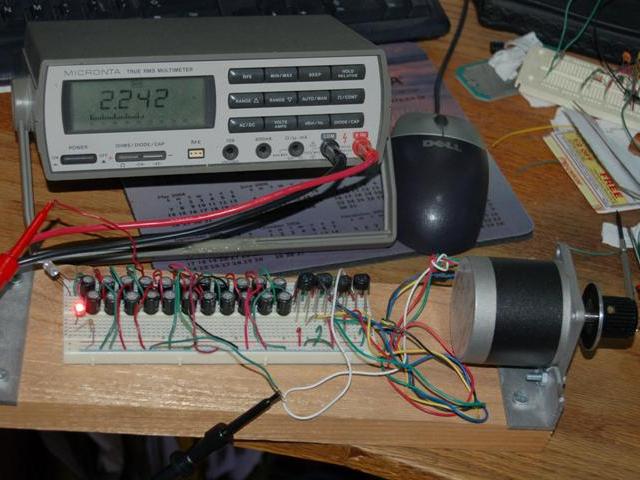
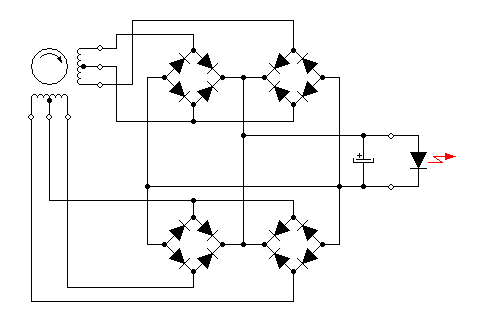
This page is for the purpose of exploring alternate power sources- either for emergency power, to use where an electric outlet is not available, or as alternative to a stash of bunny batteries. So, if you like to experiment, here are a number of different technologies for consideration.
Chemical Battery
This is the source of electrical power that has been around the longest, and the simplest to make. A battery is basically two dissimilar metals immersed in an electrolyte (a substance that ionizes). The positive terminal is the anode; the negative is the cathode.Electromotive Series
The electromotive series consists of a list of metals arranged according to the potential between the surface of the metal and an electrolyte in which they are immersed. Some (with respect to hydrogen, whose potential is zero) will gain a positive potential, while others will gain a negative potential. In the case of a battery, the more dissimilar the metals (i.e., farther apart on the list), the greater the potential voltage. Below is a list of the standard potentials:ElectrodeElementPotential (Volts)================