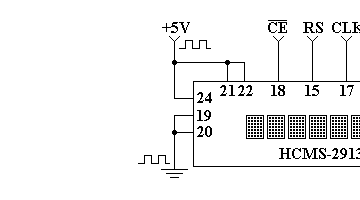
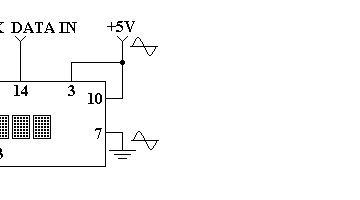
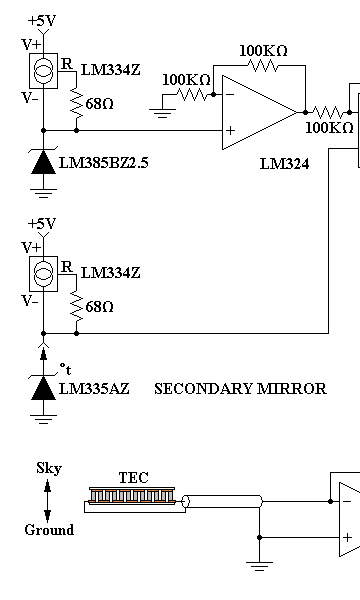
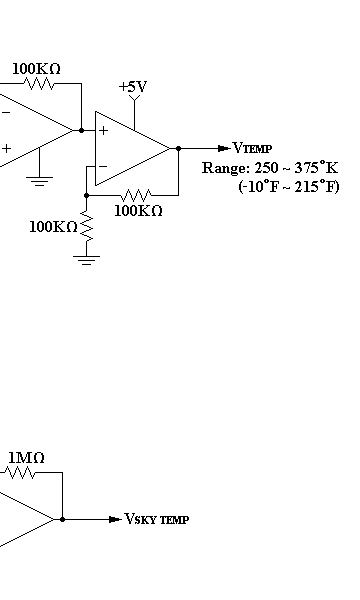
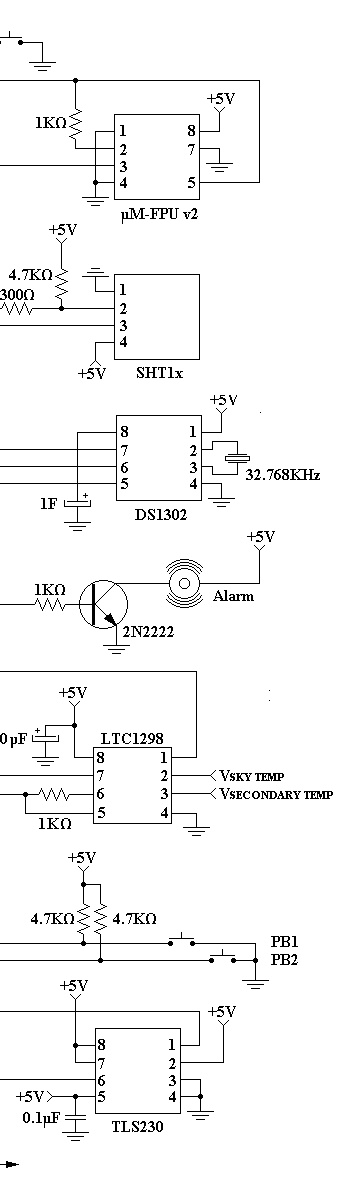
Like my telescopes, the controllers have changed dramatically since this project began. What started out as simple control and monitoring later expanded to tasks like time-keeping and cloud detection.An LED display was chosen over an LCD display for several reasons. First, the LCD display would need to be backlit. But the modules I have, while easier to interface, do not have any brightness adjustment. And this is one application where the display must be dimmed down to the lowest possible level to protect night vision. A sensor monitors light levels and adjusts them accordingly.These circuits cover the analog processing circuits for the temperature sensors.






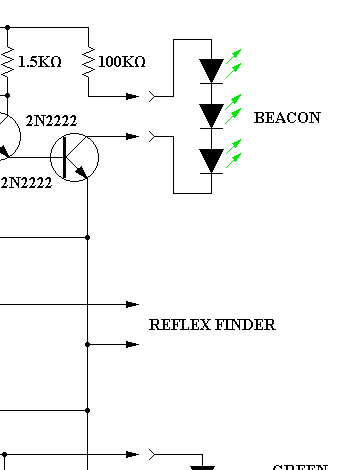
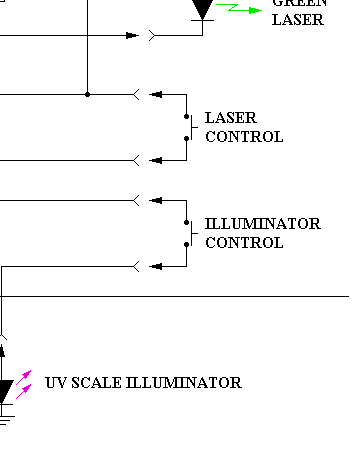
 The control box mounted on the secondary cage contains the green laser pointer power supply, reflex finder power supply, and the beacons (anti-collision flashers). It also functions as a junction box for a pushbutton switch to control the UV illuminator on the altitude bearing scale.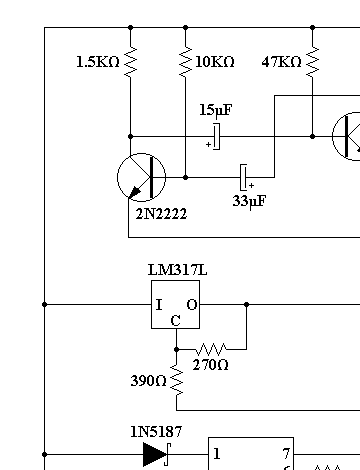
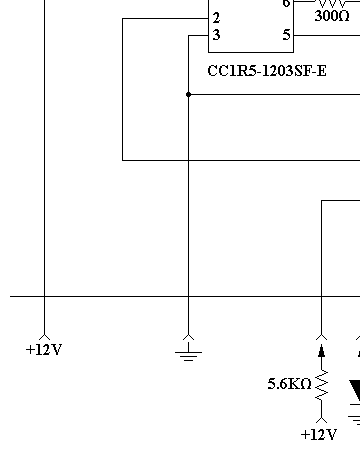
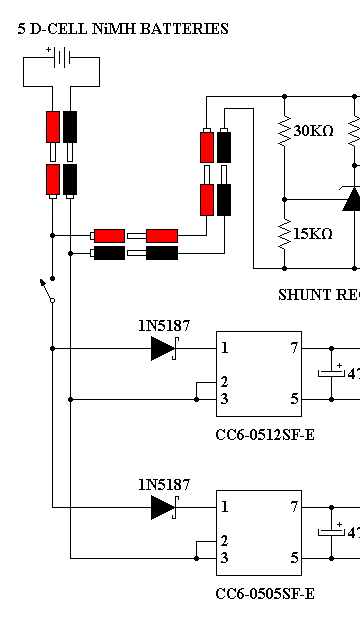
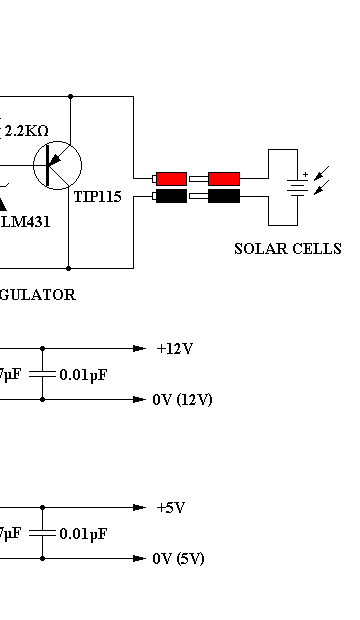
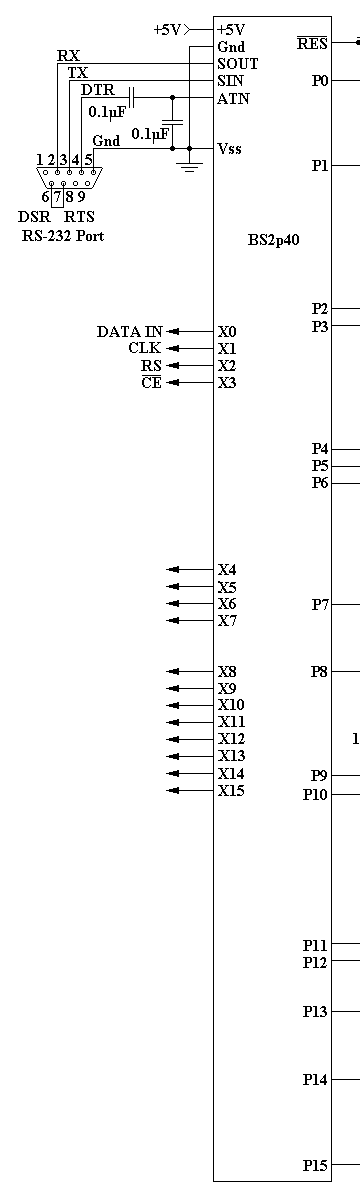
 Main power is furnished by a 5 D-cell NiMH battery pack. Two DC-DC converters provide regulated power for the electronics and fan. Also shown are the solar cells and charger.The circuit regulates the power for the secondary heater.From the beginning, I intended to use a Basic Stamp microcontroller for my project, specifically the BS2. Being able to program in a high-level language was a big plus. But as the project became more complex, I began running out of I/O lines- even with decoding. I then discovered the BS2p40, which gave me double the I/O lines. I still needed decoding to extend the number of lines, but not bad. Also, the new controller had I2C capability built in, allowing for a serial EEPROM chip to hold a library of celestial coordinates. That leads to the FPU. While the FPU greatly simplifies programming for converting celestial coordinates to alt-az coordinates, it was added to deal with calculating dew point (harder with the integer-only Basic Stamp math).Originally, before the more complex add-ons (such as calculating alt-az coordinates), the controller had only simple LEDs as status indicators (e.g., "dew point warning". "secondary heat on"). But it became apparent that a more intelligent display would be more useful. I was a John Kerry flip-flopper on the debate over using an LED dot matrix versus an LCD display. The LCD display with its tantalizingly simply interface requirements and low power demands. The LED with its tolerance to temperature extremes and adjustable brightness. Ultimately, it was the ability to adjust brightness that sealed my decision. The LCD backlight was either on or off. That's unacceptable in a dark-adapted eye environment. I managed to simplify somewhat the LED display design by eliminating the ability to read the display status.Originally, the whole project was to be powered by a marine deep-cycle battery. Needless to say at how inconvenient that is to move around- especially if the cooler is not needed. So, a separate on-board battery was added to power everything but the cooler, and keep the two isolated. The controller was originally intended to be powered by a 12 volt battery. Naturally, that intent carried over to the split power design. In order to allow flexible power choices (e.g., rechargeable NiMH and lead acid batteries as well as standard alkaline batteries), the power supply ended up as several isolated supplies (12 volts for fans and beacons, 5 volts for the microcontroller and analog electronics). And that happened when I could find no way around the problem with using NiMH batteries. Originally, I wanted to string in series enough batteries together to make the 12 volt supply. But NiMH battery voltage is 1.2 volts average and alkaline batteries 1.5 volts. And I also wanted to be able to use a lead acid battery, plus use solar cells to recharge the batteries. So, I have multiple choices with differing voltage and charge / discharge characteristics. Realizing that I could segregate circuits using differing voltages, I chose to use DC-DC converters. I calculated my power requirements, then compared them against available DC-DC converters. I ended up chosing an oddball combination of batteries (5 D-cell sized batteries, NiMH or alkaline). The DC-DC converter modules worked with an input from 4.5 to 9.0 volts, so that covers NiMH (6.0 volts), alkaline (7.5 volts) or lead acid (6.0 volts).Earlier incarnations of the controller used relays. The solid-state relays now available provide a convenient way to eliminate electromechanical relays. They also allow various power supplies to stay isolated (see Power). Since the GPS module was deemed to be a high-drain component, power to the GPS module is also switched, as it has no "sleep mode" to conserve precious battery power. When the GPS module has gotten a fix (or determined that one cannot be made), power is turned off.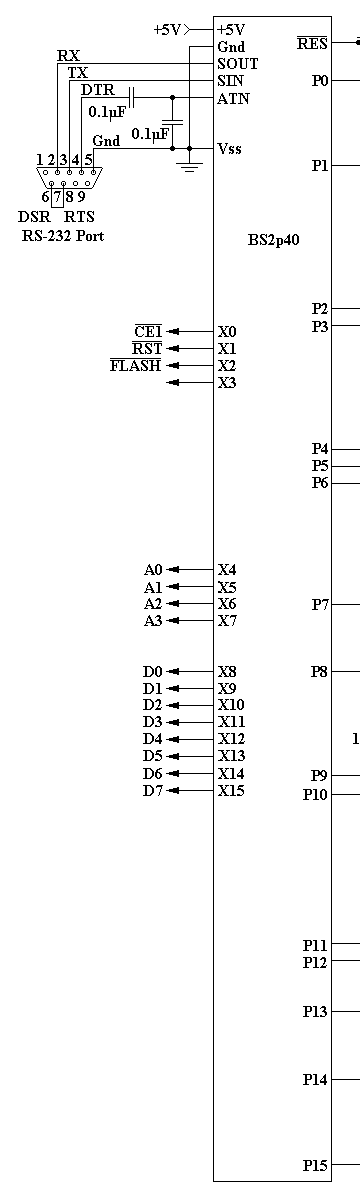
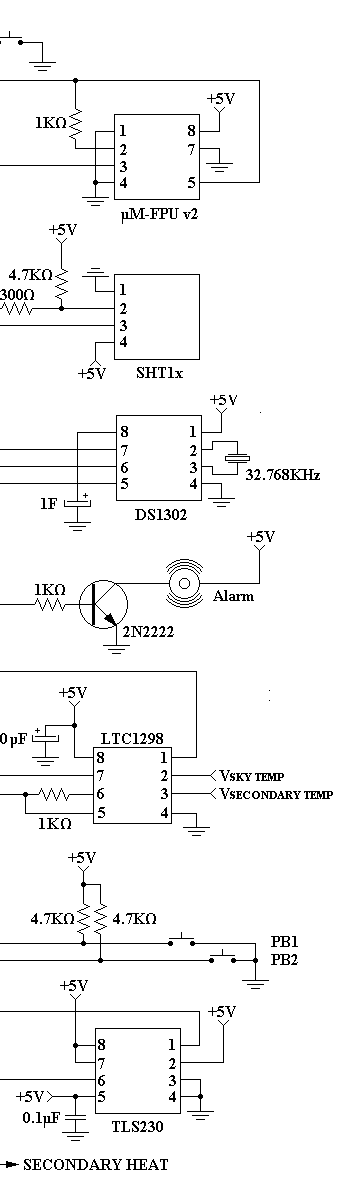
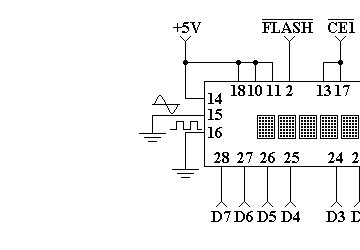
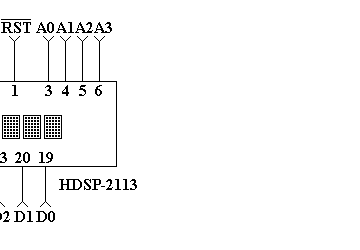













 An LED display was chosen over an LCD display for several reasons. First, the LCD display would need to be backlit. But the modules I have, while easier to interface, do not have any brightness adjustment. And this is one application where the display must be dimmed down to the lowest possible level to protect night vision. A sensor monitors light levels and adjusts them accordingly. Also, unlike the Stargate-3, a serial input was chosen to keep the I/O line count down.